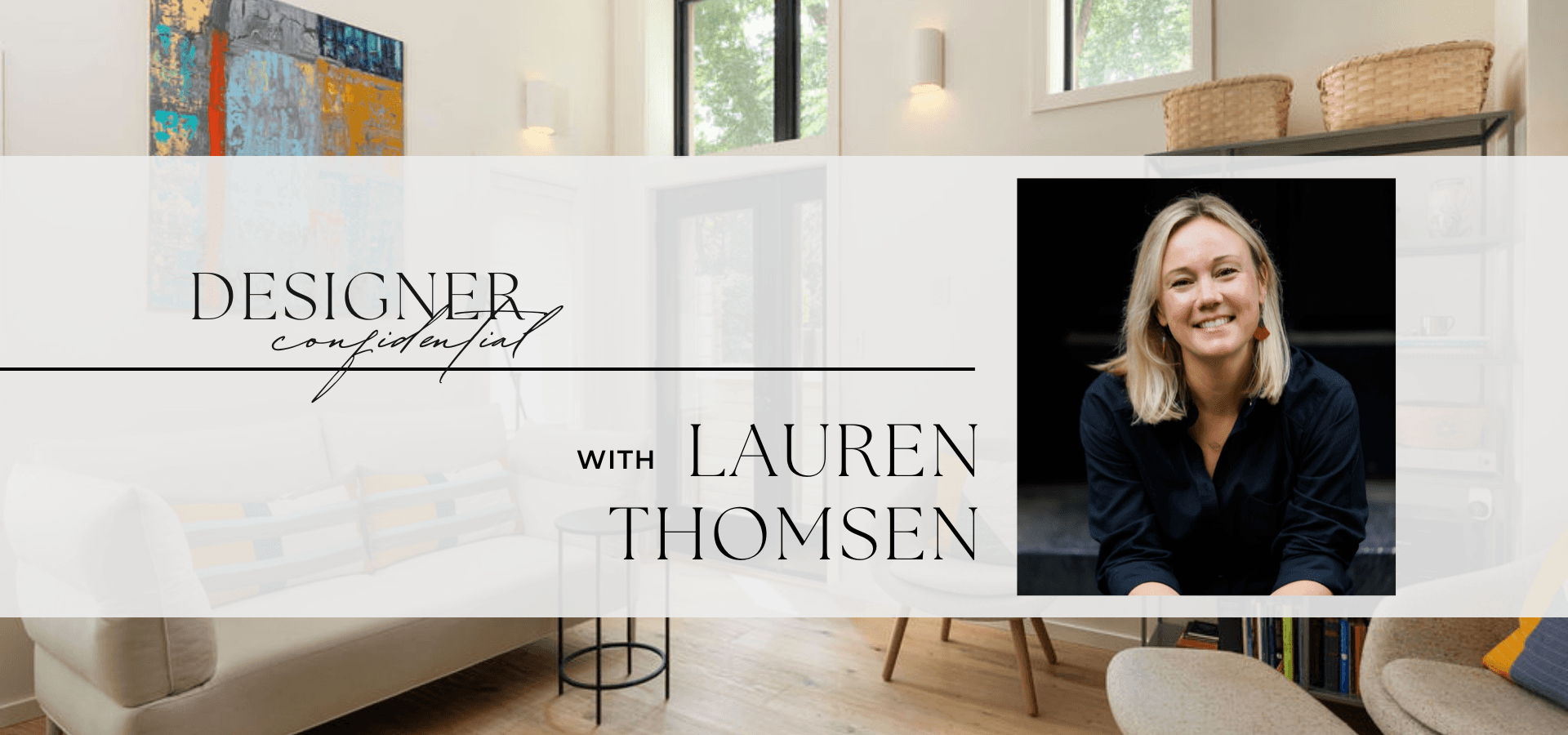









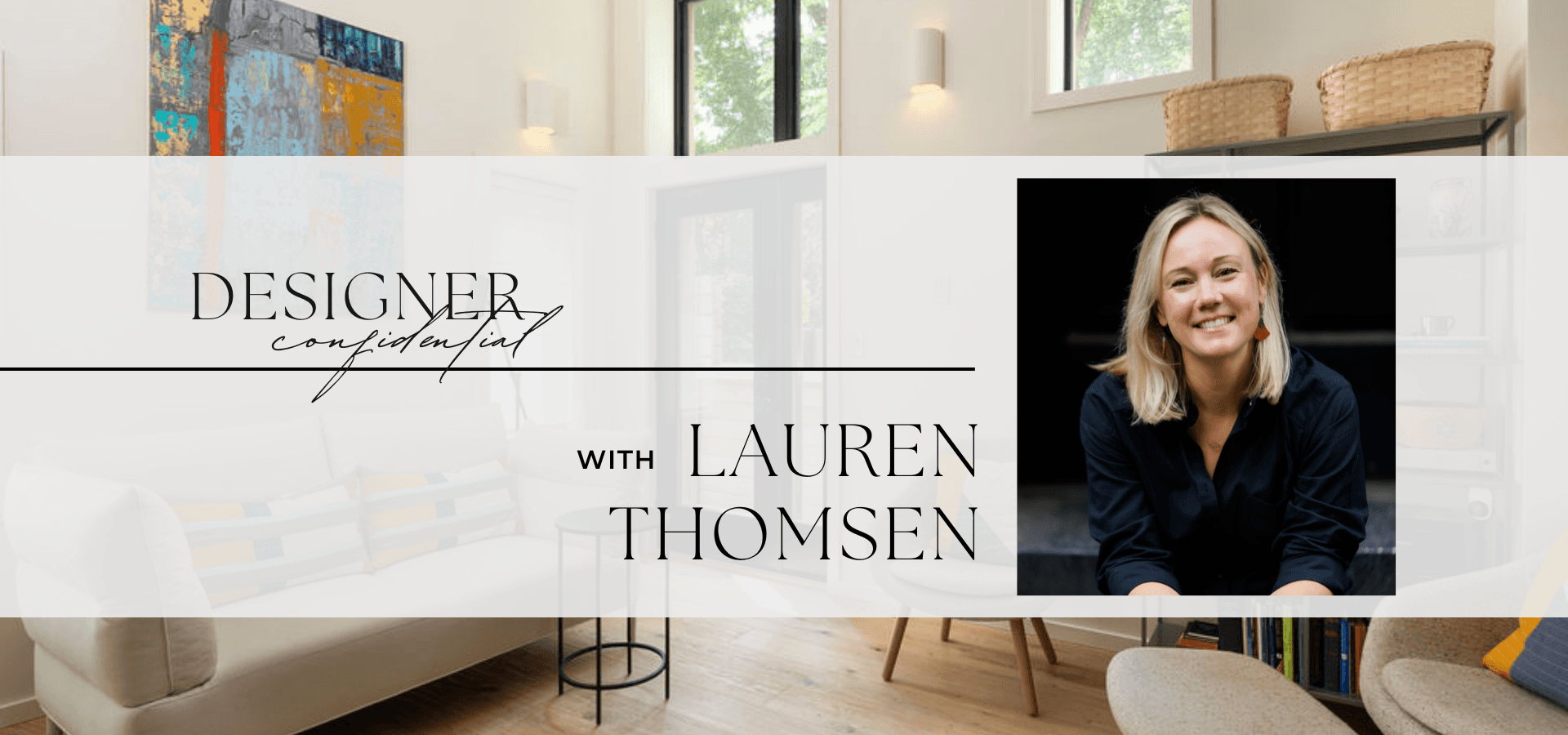
For Philadelphia-based architect Lauren Thomsen, an appreciation for good home design has always been a part of her life—all the way back to childhood.
“I have always been drawn to architecture, and to homes in particular,” she says. “I started drawing houses when we moved when I was seven. To me, there is no separation between architecture and interior design—the disciplines are an extension of one another. Architecture without people, finishes, furniture is an unfinished thought, and conversely, you can’t consider the design of the interiors without first understanding or creating the qualities and bounds of the space.”
Lauren’s eponymous architecture and interiors studio takes a considered approach to sustainable residential design, specializing in energy-efficient, high-performance homes paired with a modern, minimalist aesthetic. The unique experience of designing each home is, in Lauren’s experience, both the most rewarding and the most challenging part of what she does.
Here, Lauren shares more about the design of this warm, urban rowhouse, a compact and sustainable project that boasts a rigorous PHIUS+ 2018 Passive House certification (only the seventh project to receive this designation in Philadelphia!).
What’s the story with this project?
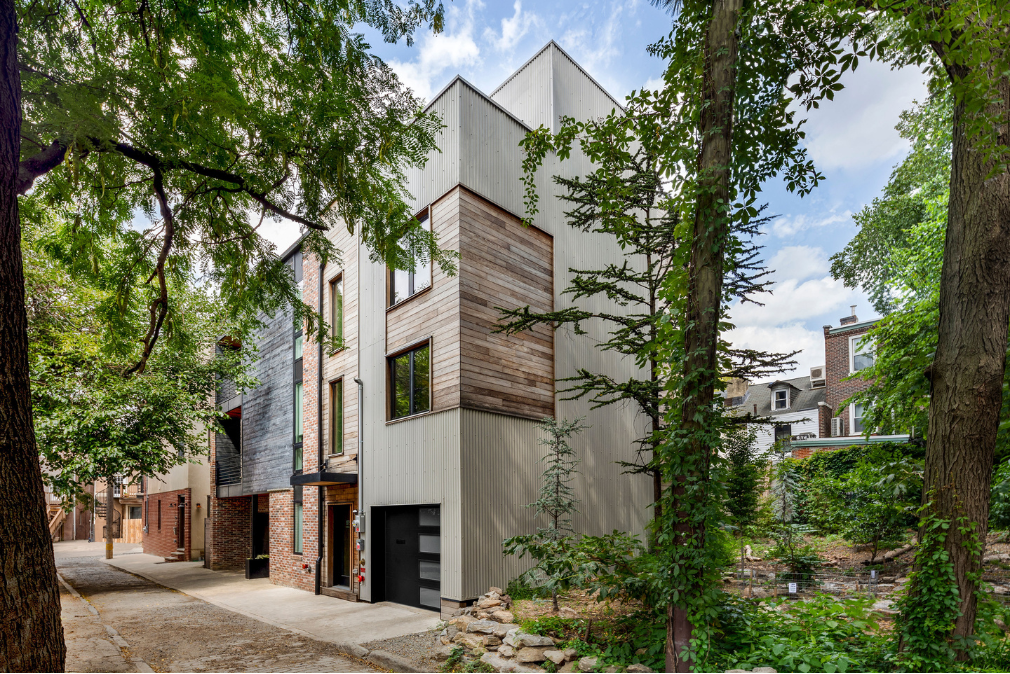
The project began in 2019, was delayed by an elongated approvals process during the pandemic, and was finally completed in 2023. Our clients were downsizing and moving to be near their children, who live in the property to the rear of the home. We knew they had high ambitions for the level of design as well as building performance, and we were excited about the challenge.
The clients wanted a minimal approach in terms of space, amenities, and materiality, and also wanted the project to be as high-performance and resilient as possible.
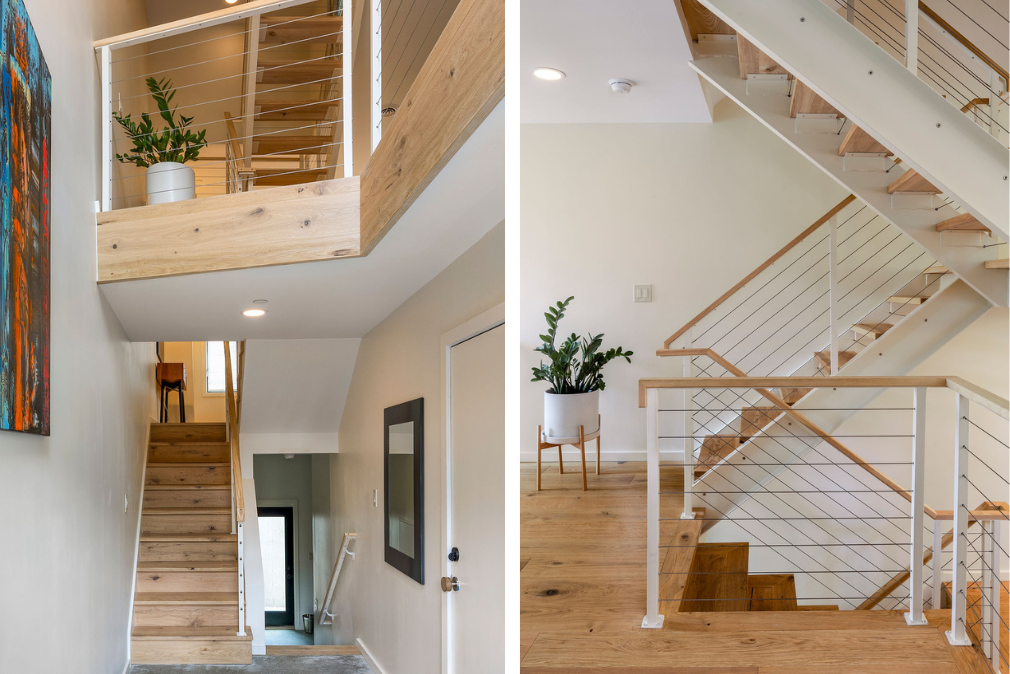
What’s the vibe of the finished space?
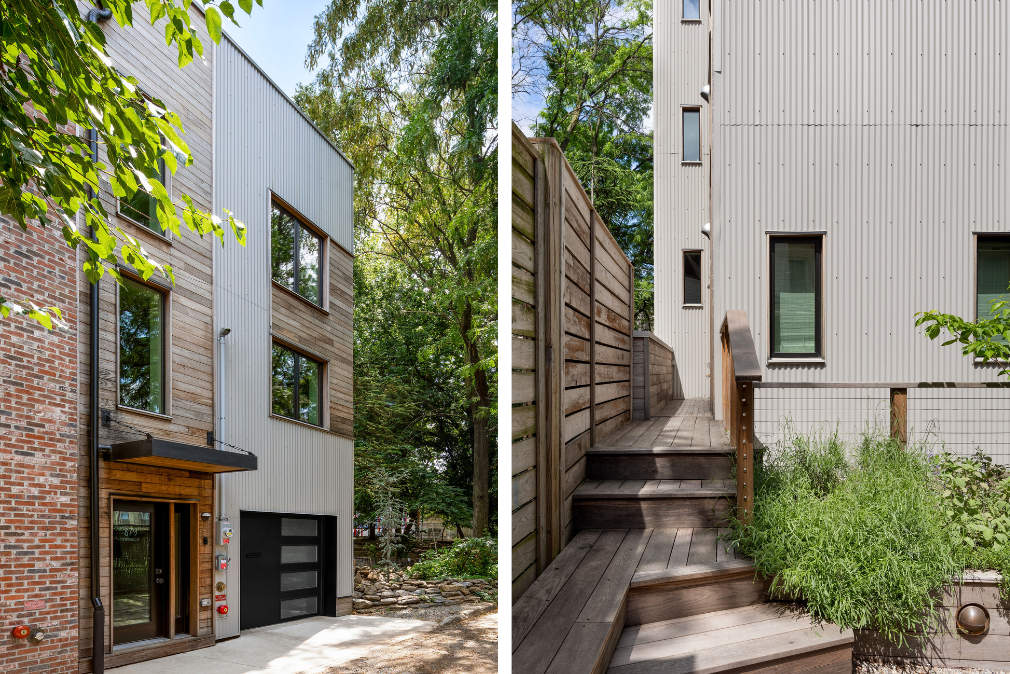
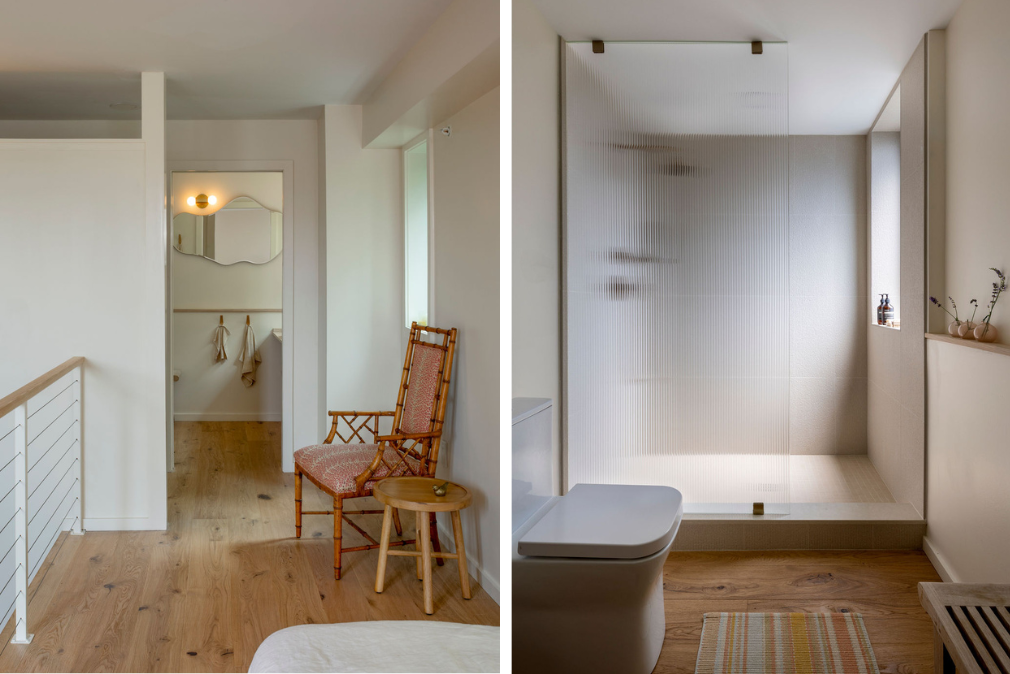
Despite the home’s 18-foot width and total of 1,675 square feet of conditioned living space (excluding the garage), the four-bedroom, three-bathroom home does not feel like a traditional rowhouse. The well-lit interiors feel spacious and serene, and evoke a rare sense of quiet and calm in a dense urban environment.
How did you approach the project? What were the steps involved in your creative process?
The property is situated immediately adjacent to a beloved local park, on a largely pedestrian nine-foot-wide “cart street.” Consequently, the design team set out not only to construct a residence that solved programmatic requirements, but also one that was in dialogue with the green space to the south.
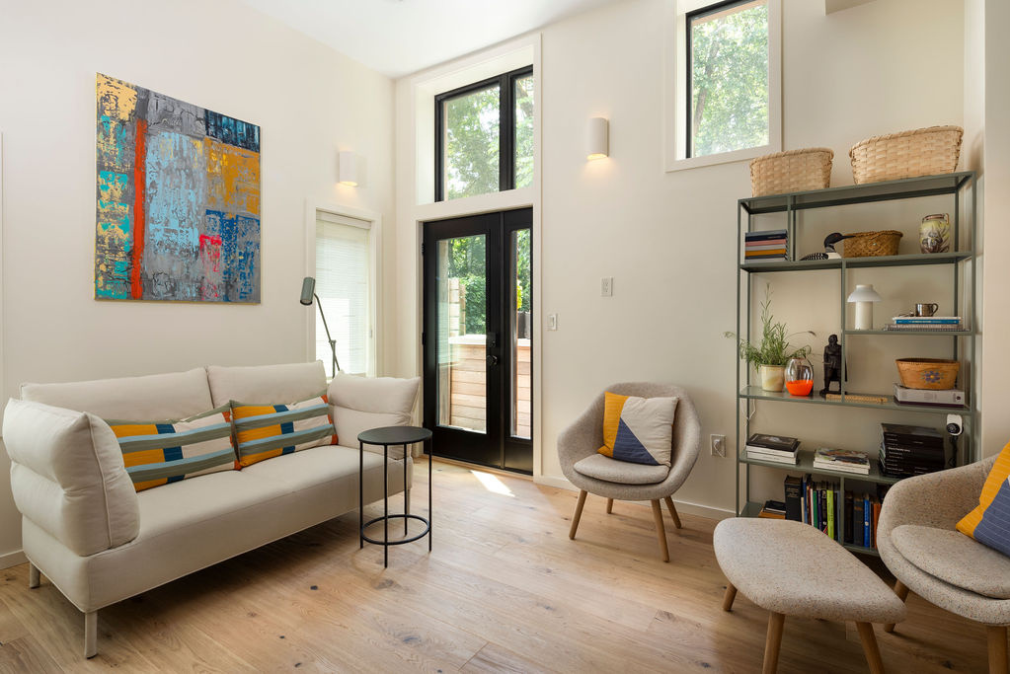
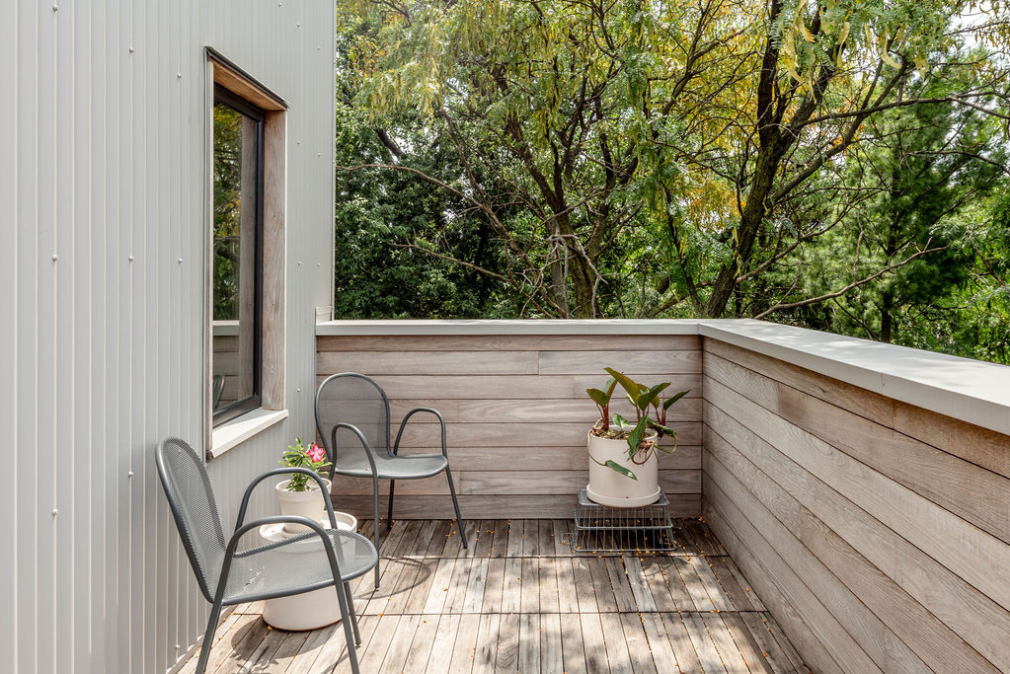
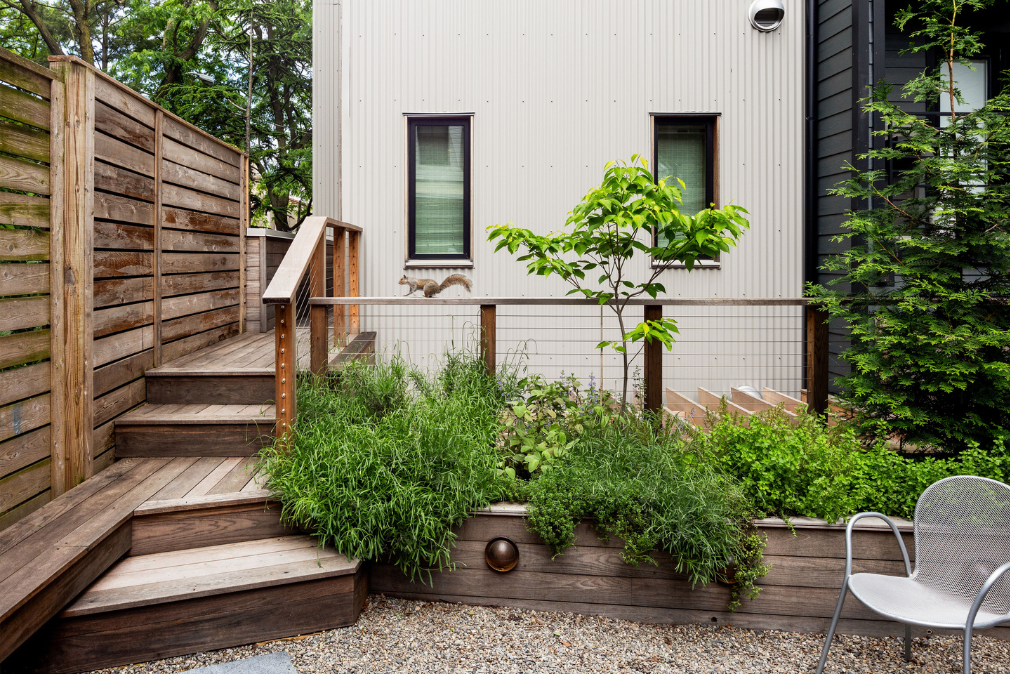
A study of the building massing led to the decision to set back a portion of the building from the property line. This sacrificed precious potential interior living space on the tiny 800-square-foot lot, but allowed for glazing on the long axis with southern exposure (uncommon for rowhouses), created a visual connection to the park, and also provided an opportunity for a small terrace off the main living space.
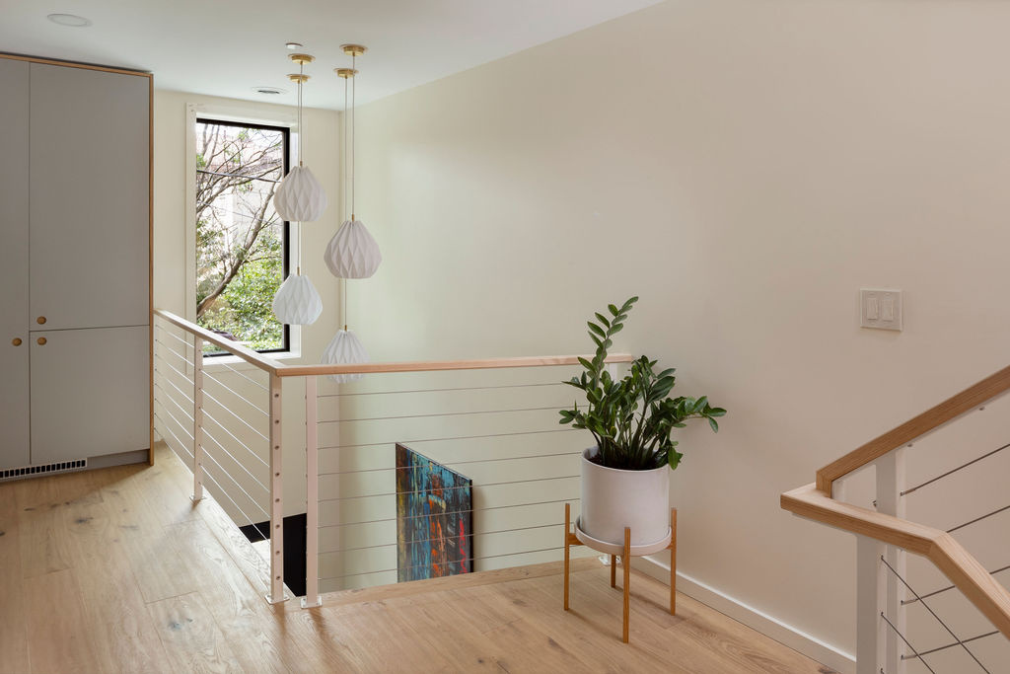
On the interior, the goal of the project was to make the home feel like a sanctuary from the busy and dense urban environment. It is bright, quiet, and minimally appointed with warm, natural finishes.
What aspects of this project were most rewarding to you?
The project received the rigorous PHIUS+ 2018 Passive House certification. At the time of certification in 2023, it was only the seventh certified passive house project in Philadelphia. It was a great accomplishment for the team, but more importantly, we met the goals of our client—both in certification and the knowledge that they now have a highly efficient and well-designed home.
What aspects were particularly challenging, if any?
From a performance perspective, designing and constructing a single-family passive house in an attached and dense urban condition was challenging, but very regionally appropriate for Philadelphia. The team worked with PHIUS to ultimately modify their certification standards to better account for adiabatic party walls in the envelopes of attached single-family homes and pave the way for other project teams with similar design ambitions.
What are your favorite details or elements of this design?
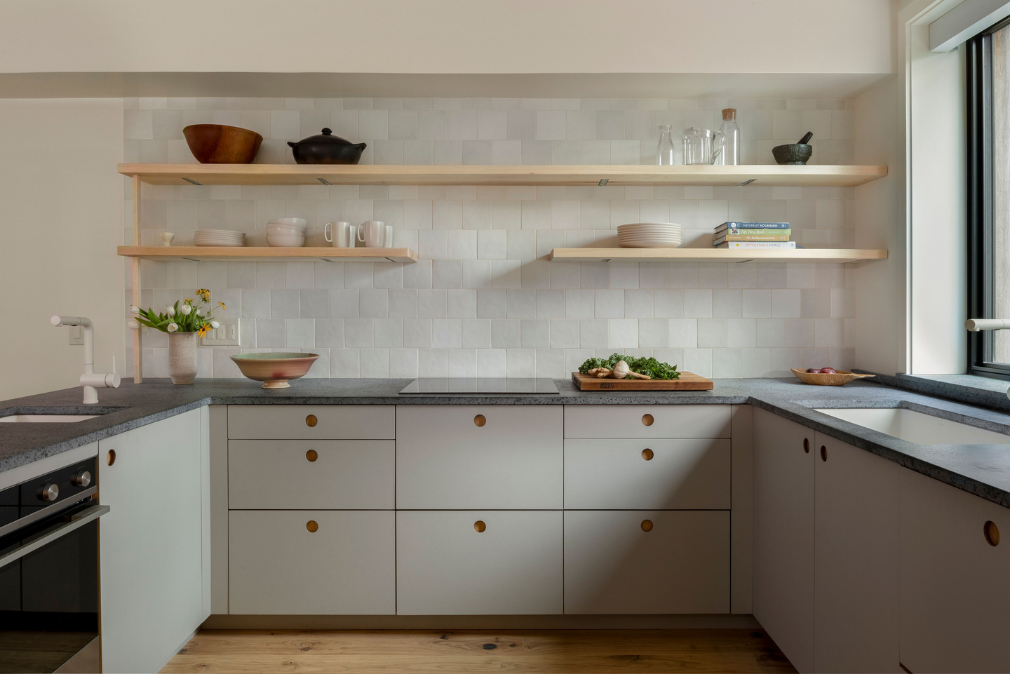
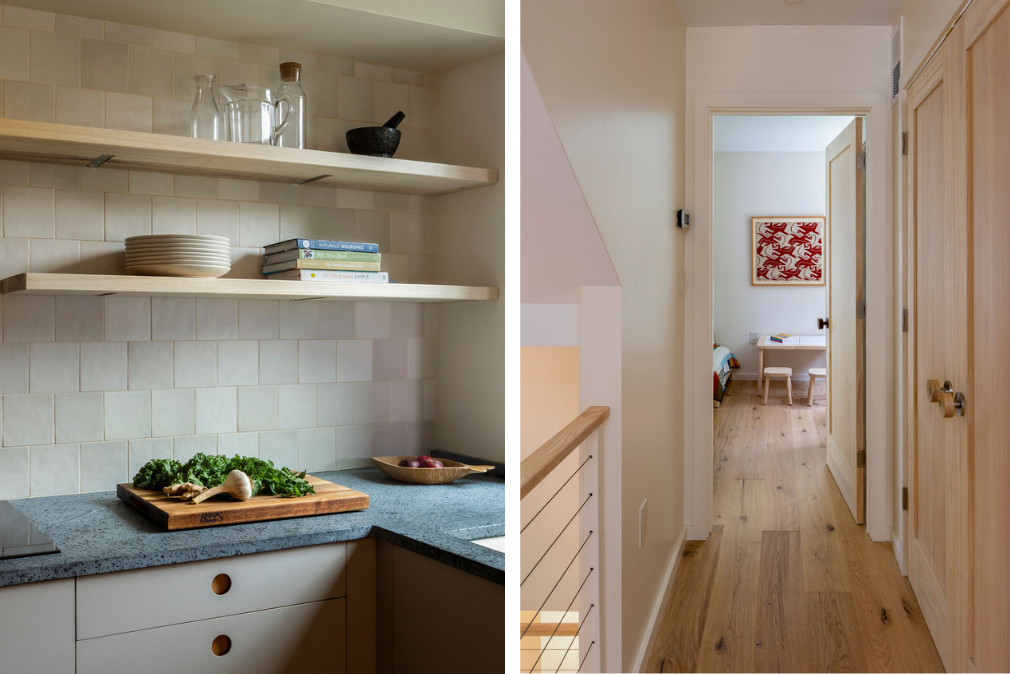
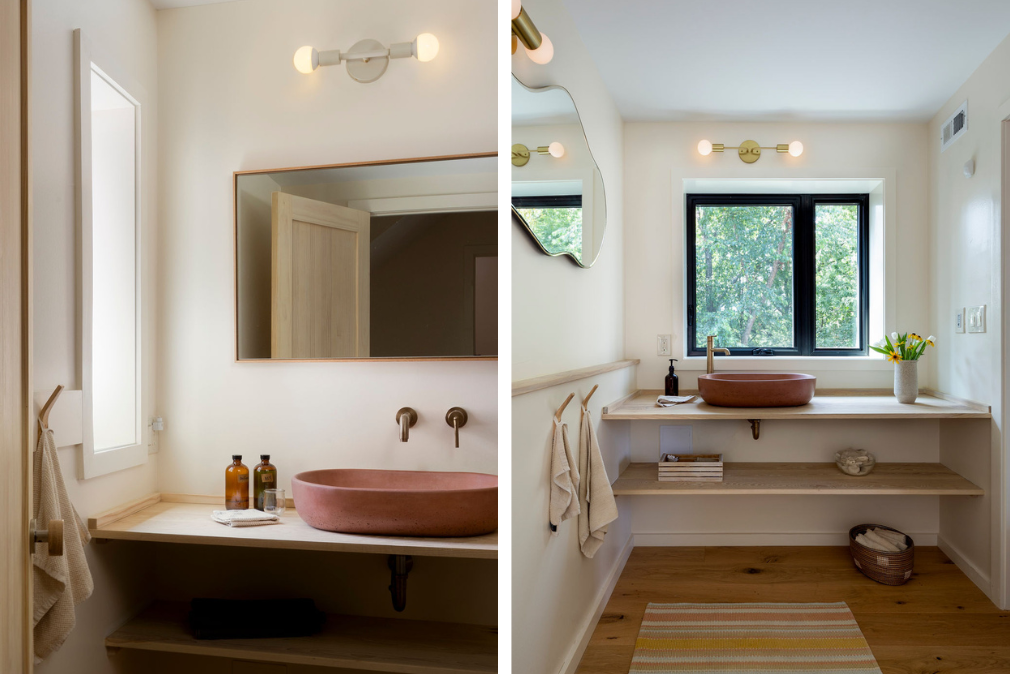
I love all the natural materials that were embraced by our clients—the stained wood doors and doorknobs, concrete vessel sinks on simple ash vanities, floating ash shelves in the kitchen, a soapstone countertop left unfinished so it will naturally patina, and stained concrete in the entry. The materiality of the house is simple and honest.
And finally, our favorite question: What’s one tip or hack that only a designer will tell you?
Don’t be dogmatic. Be nimble and open to new ideas, approaches, and challenges.
Credits
Architecture: Lauren Thomsen, Principal, Lauren Thomsen Design
Interiors: Lauren Thomsen, Principal, Lauren Thomsen Design
Passive House Design Consultant: Matt Gindlesparger, Technical Director, Lauren Thomsen Design